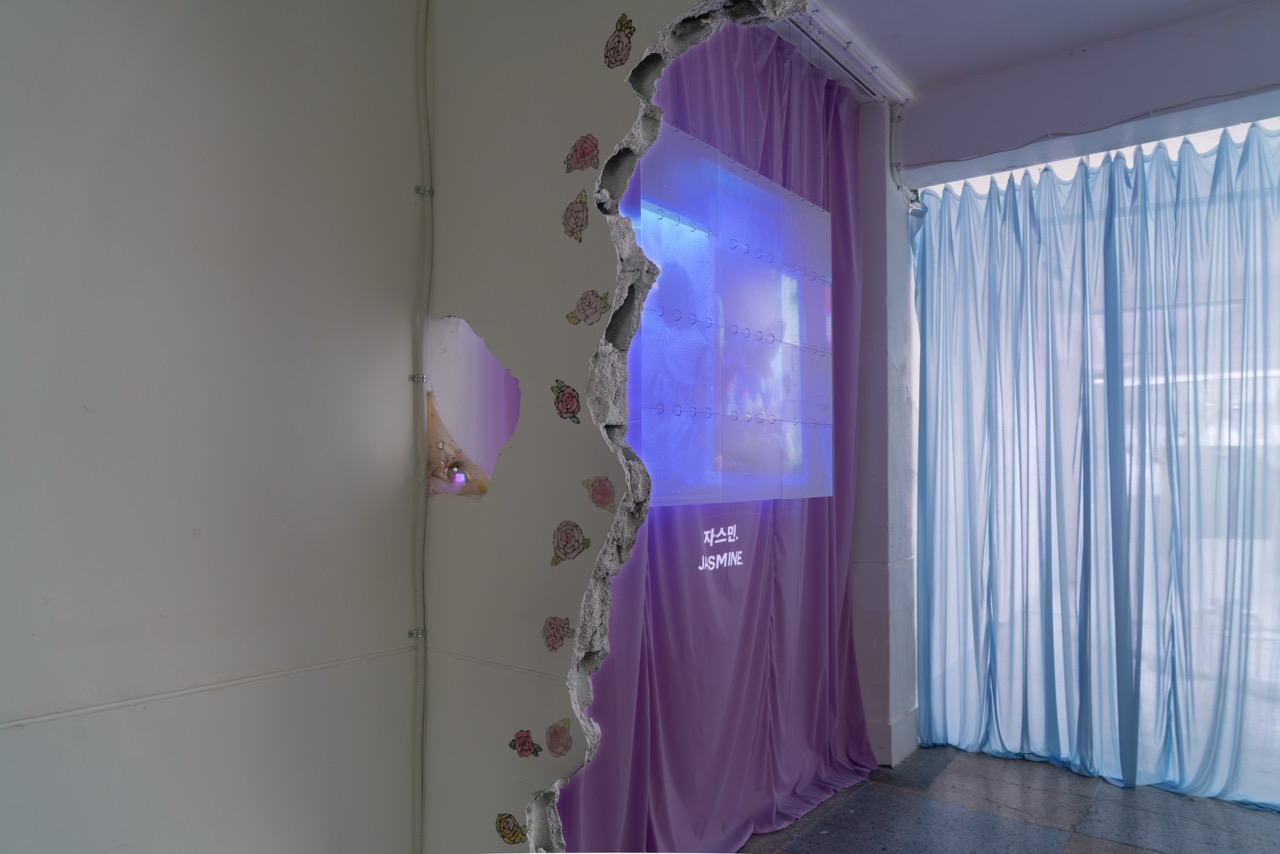
The exhibition begins with a subtle sense of estrangement. East Asian cities are saturated with images of love: advertisements, dramas, social media, and self-help books constantly repeat romantic narratives. Love has become the urban landscape, endlessly repeating the same message: “With our ageing population, please love! Quickly!” Amid this urgency, love has become a procedure to follow, a script to perform.
Yet the love we are urged to pursue is never neutral. The prioritisation of heterosexual romance organises family, community, and the future while sustaining patriarchal capitalism by assigning women the work of love and care. Women’s bodies, desires, and intimacy are thus continually regulated and judged in the name of love.
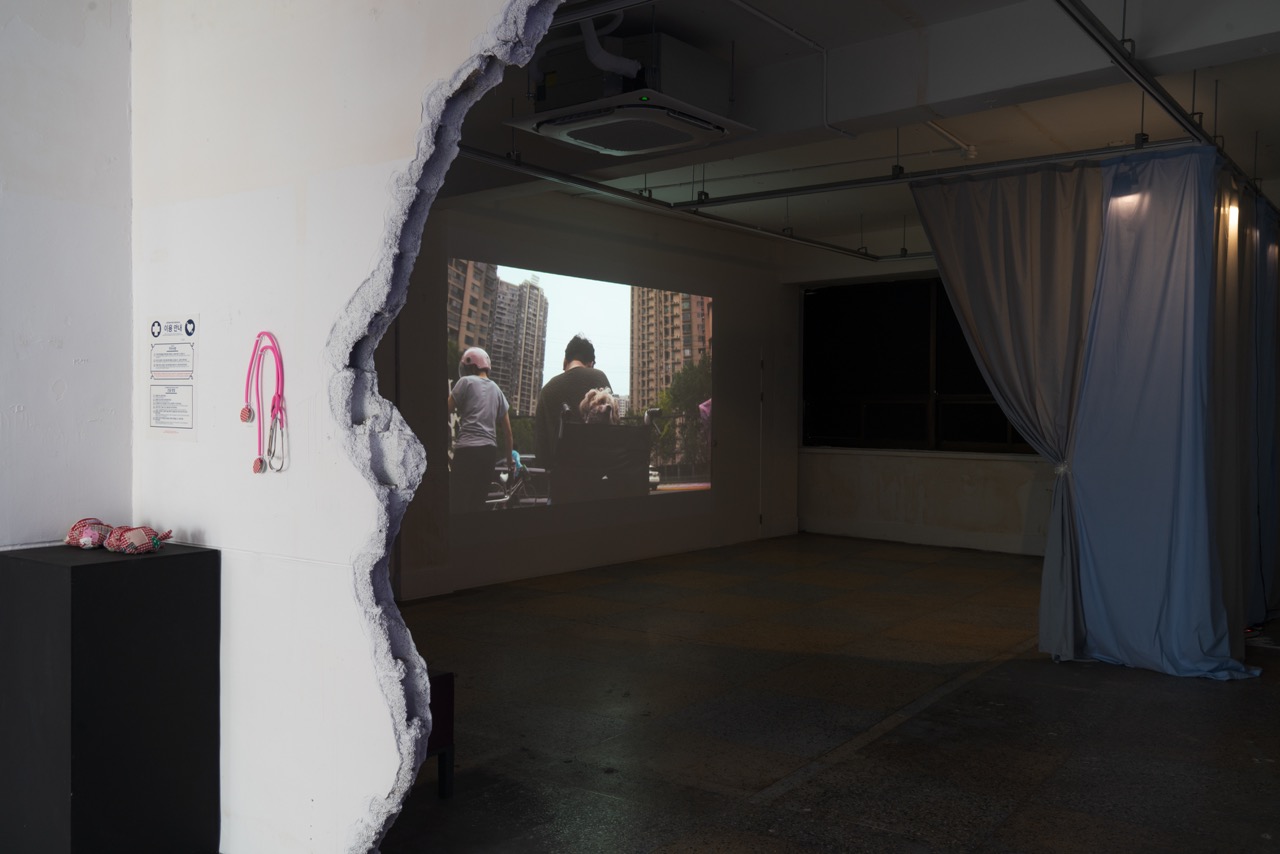
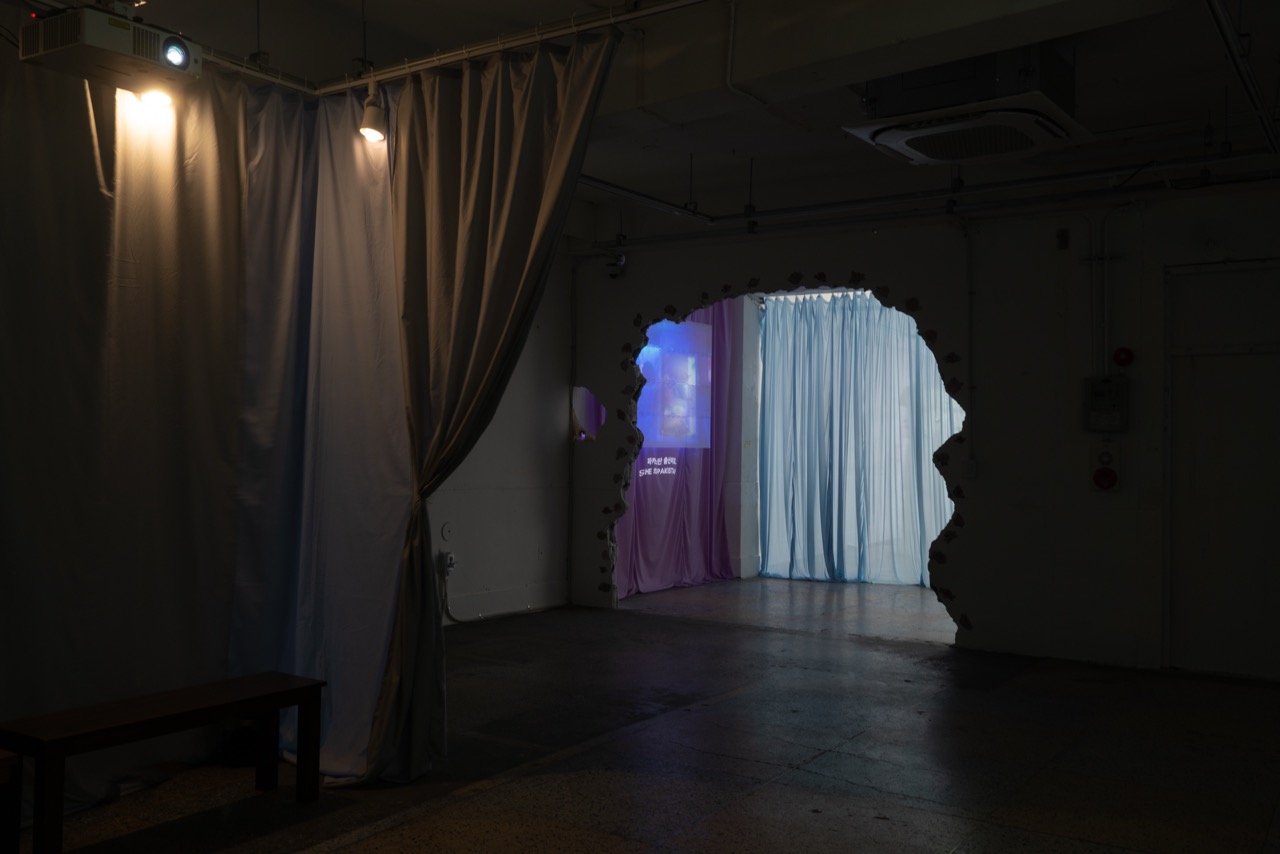
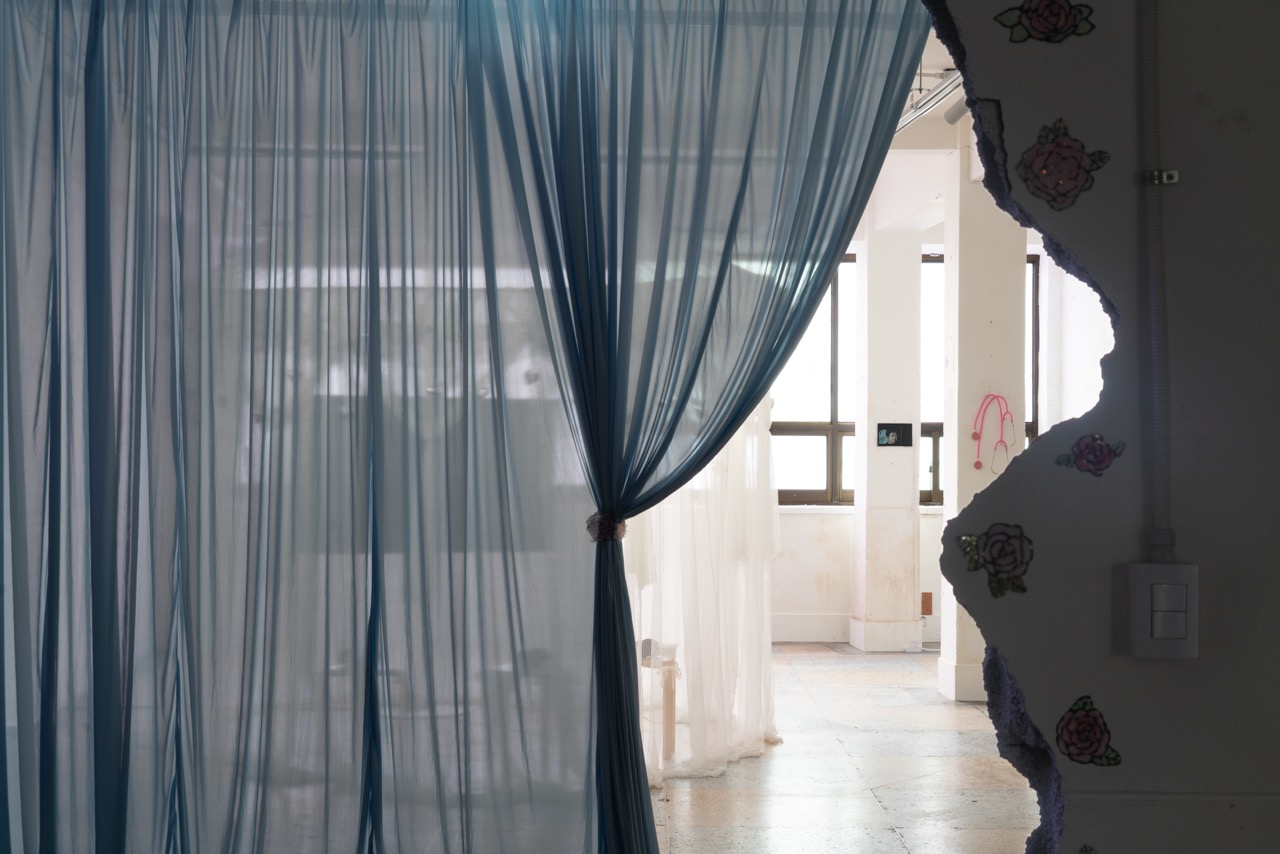
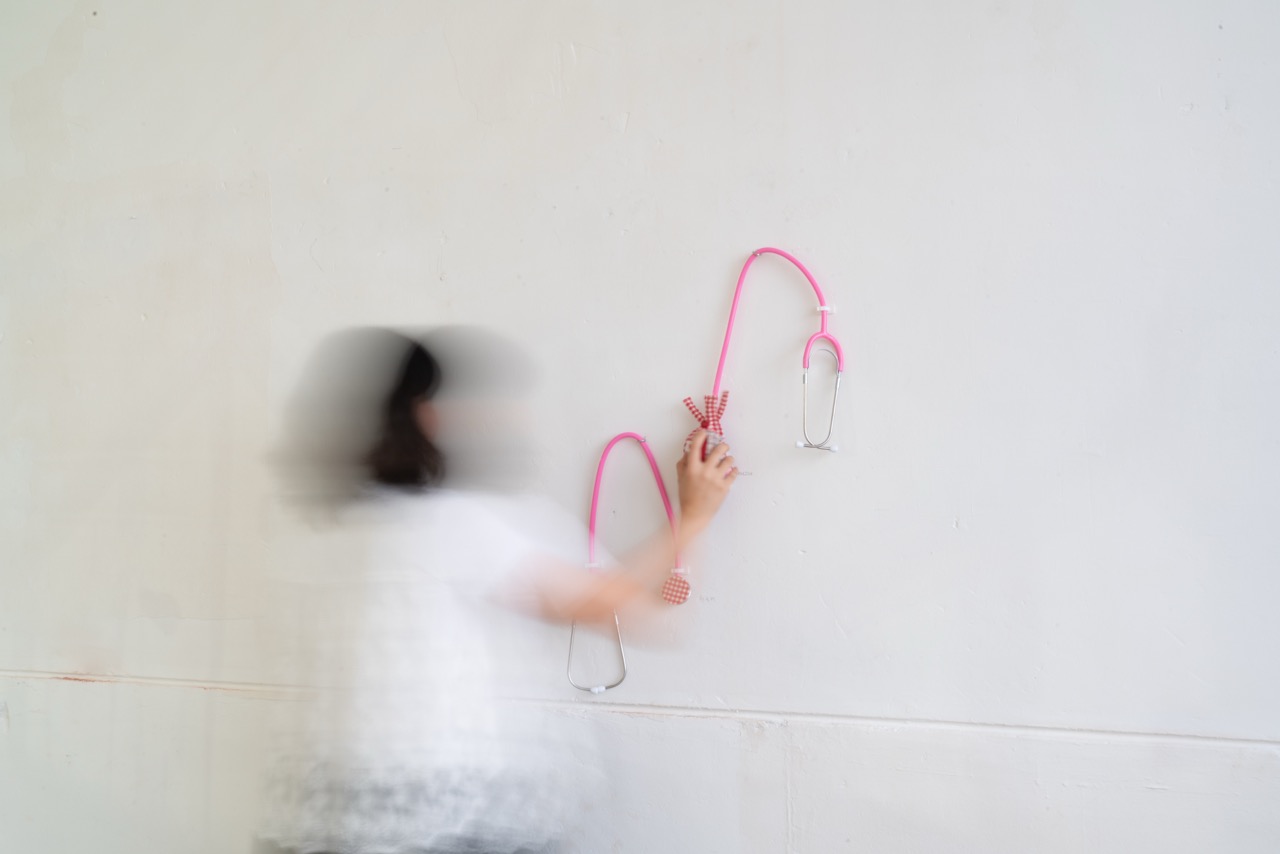
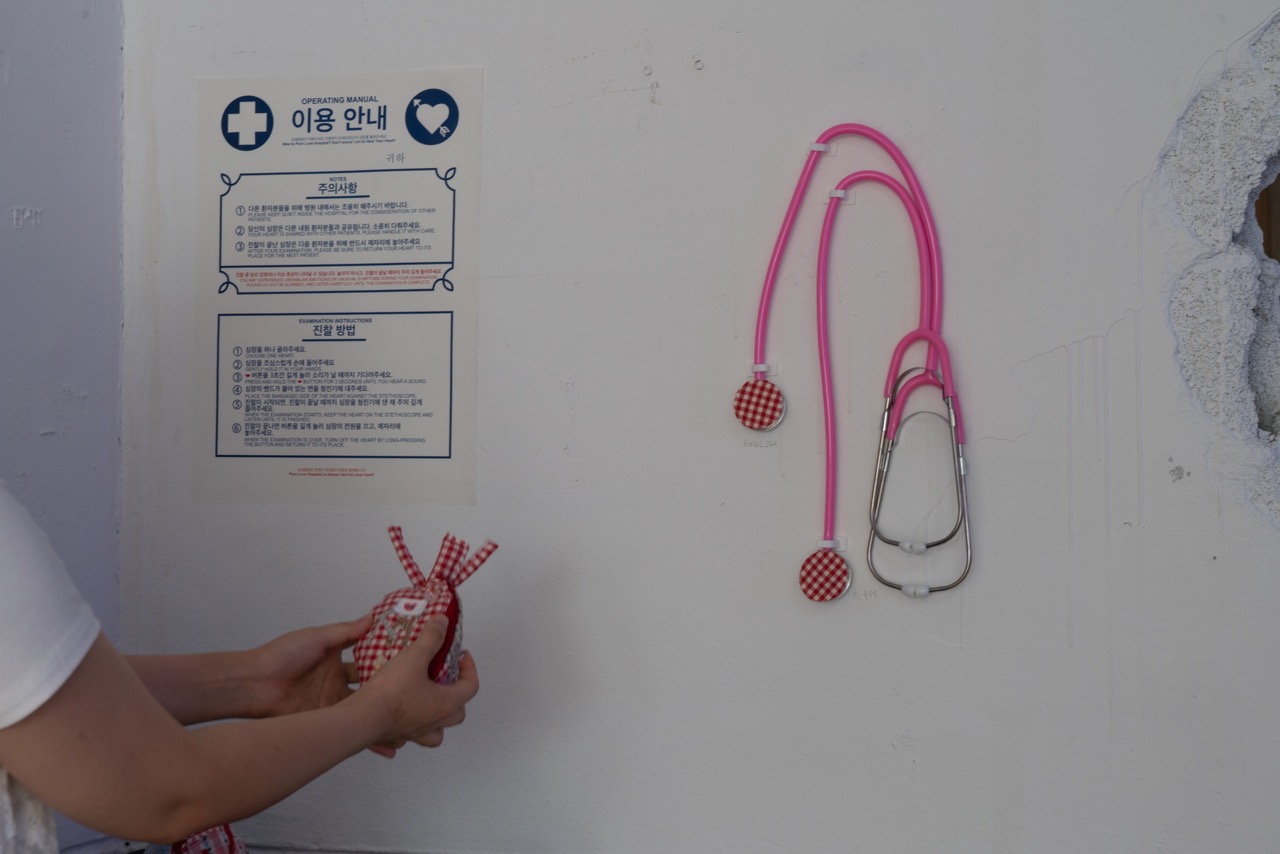
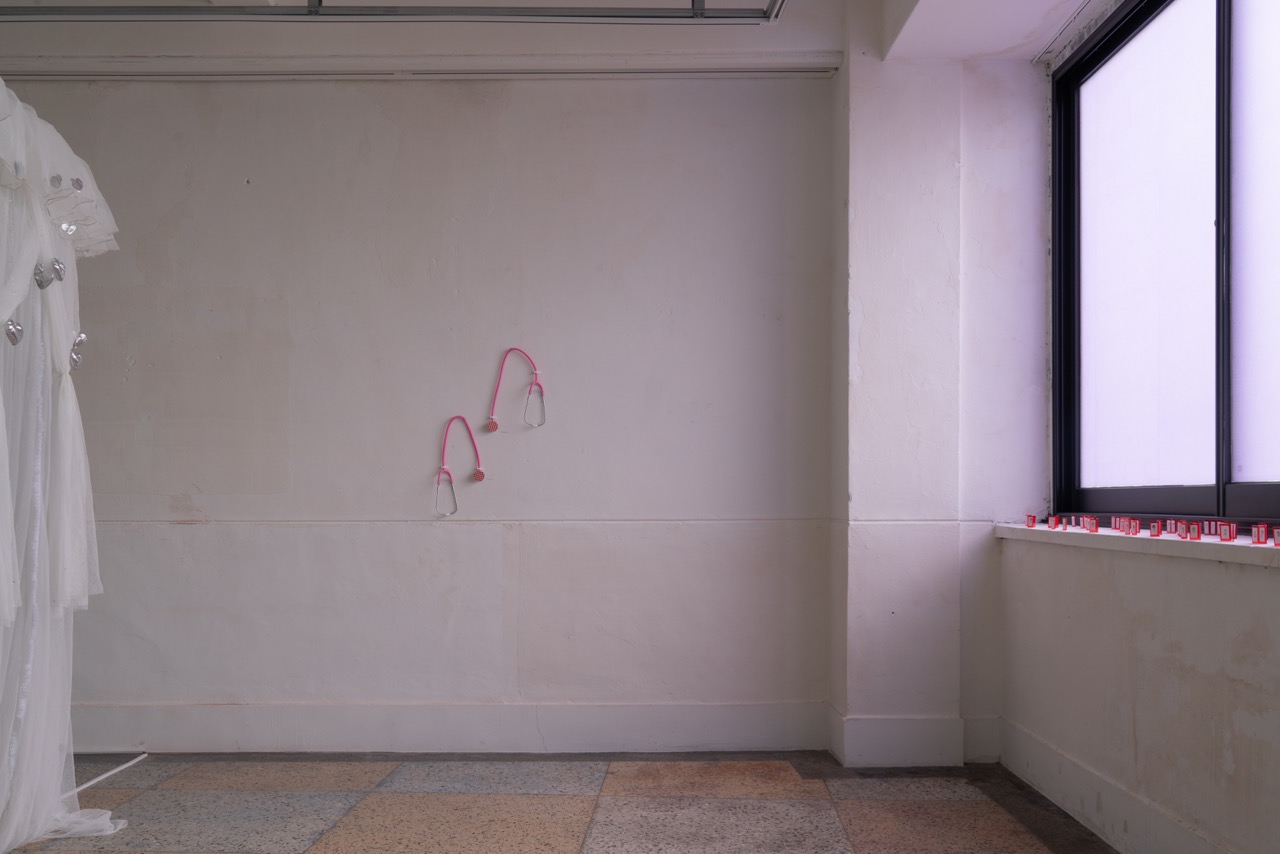
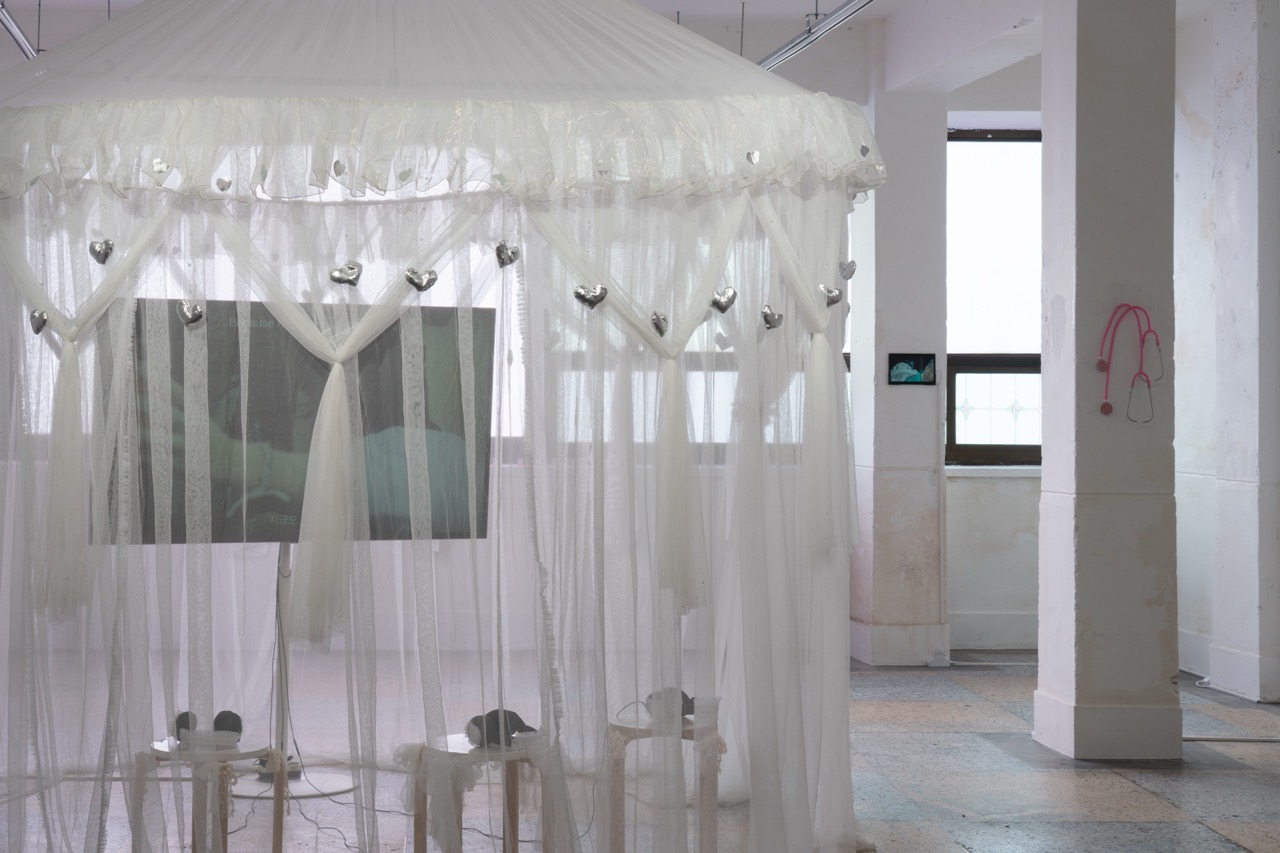
(Un)trustworthy Hearts stages these norms through the dramaturgical space of Pure Love Hospital. Just as a hospital diagnoses and classifies symptoms, Pure Love Hospital diagnoses cases of love, determining what counts as proper love. Visitors move through the exhibition guided by a voiceover narrated in the style of a clinical consultation. Expectations surrounding love become medical records, and the artworks become case studies.
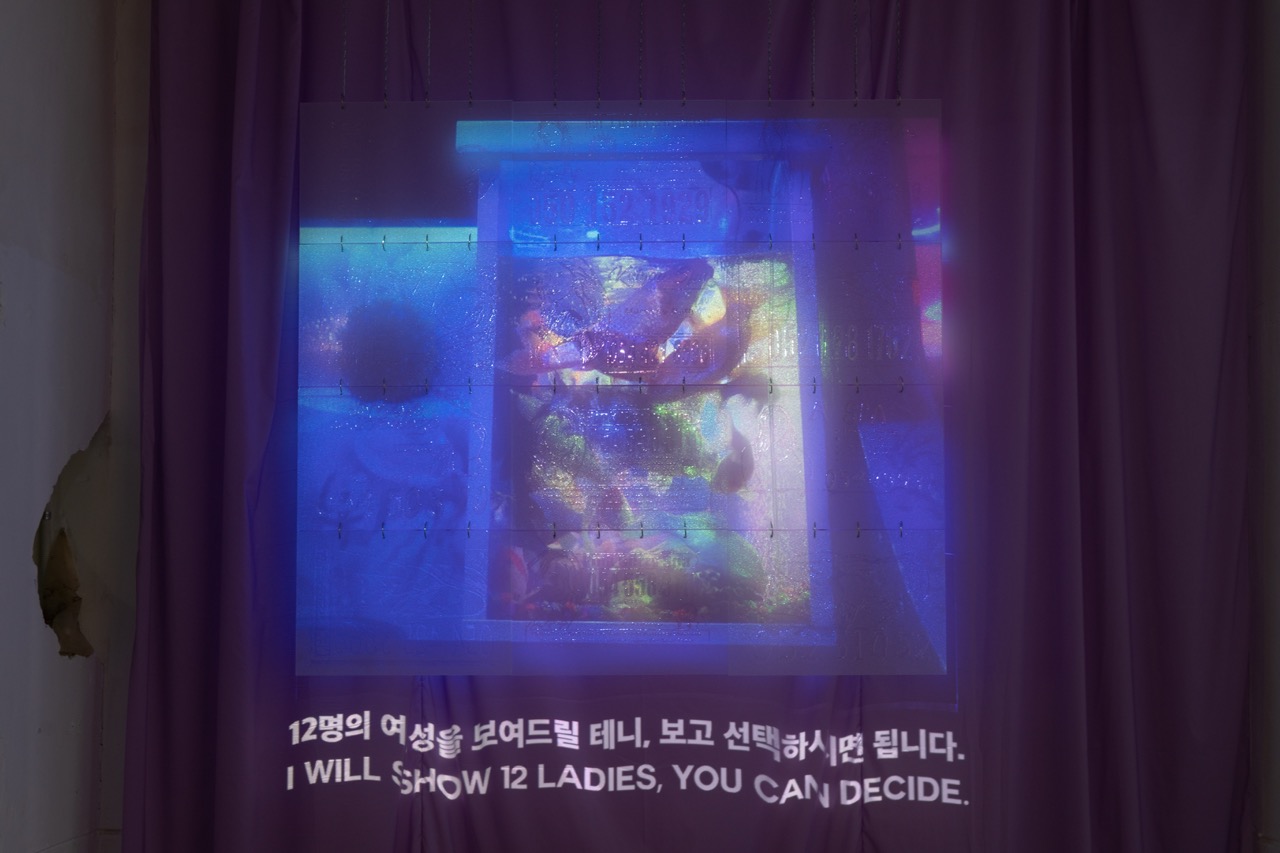
The first case, Fish Tank (2023), reveals the reality of women being positioned as objects of sexual desire. Filmed in an illegal massage parlour in Abu Dhabi, the work depicts female workers who are displayed for clients, overlaid with ornamental fish that mirror the women’s social position. Like the fish that are seen as helpless beings in need of protection, women are reduced to objects of desire and control. By exposing the contradictions surrounding women, the work suggests that the world upon which the Pure Love Hospital’s diagnoses are based rests on unstable foundations.
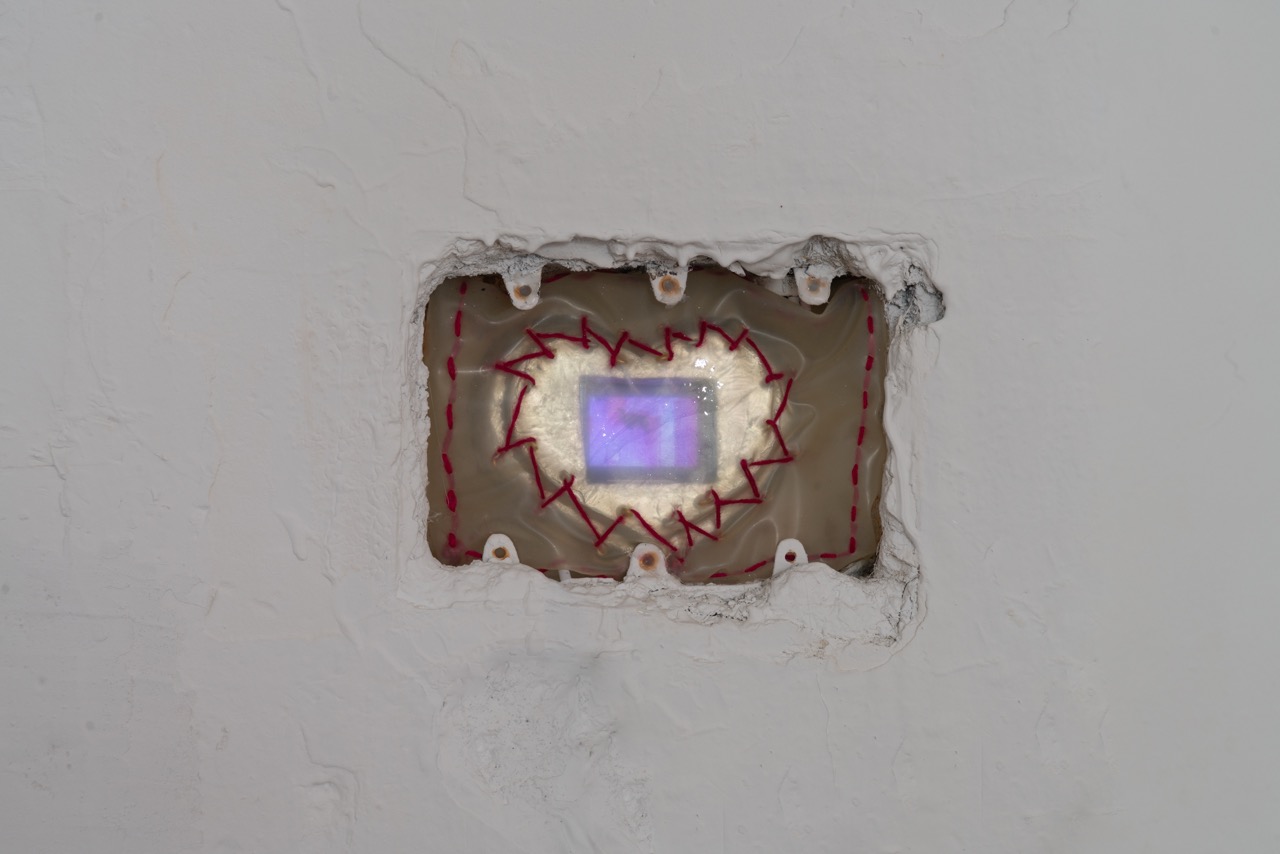
Meanwhile, the second case unfolds in two parts. The first half, Still Life (Nothing Here to See) (2026) appears unexpectedly throughout the exhibition as seemingly abandoned Tamagotchis covered in decaying flesh. However, on the screen, the kuroko (黒子) appears. In traditional Japanese theatre, kuroko move the props and scenery onstage while remaining unseen. Within normative love, women are called to be loved and protected, yet are equally expected to devote their entire beings into acts of care, thus rendering themselves invisible. Yet the kuroko in Still Life (Nothing Here to See) no longer erases itself for others. It enjoys time alone and actively asserts its presence. Its gestures are no longer acts performed to sustain a relationship, but become a form of play for itself.
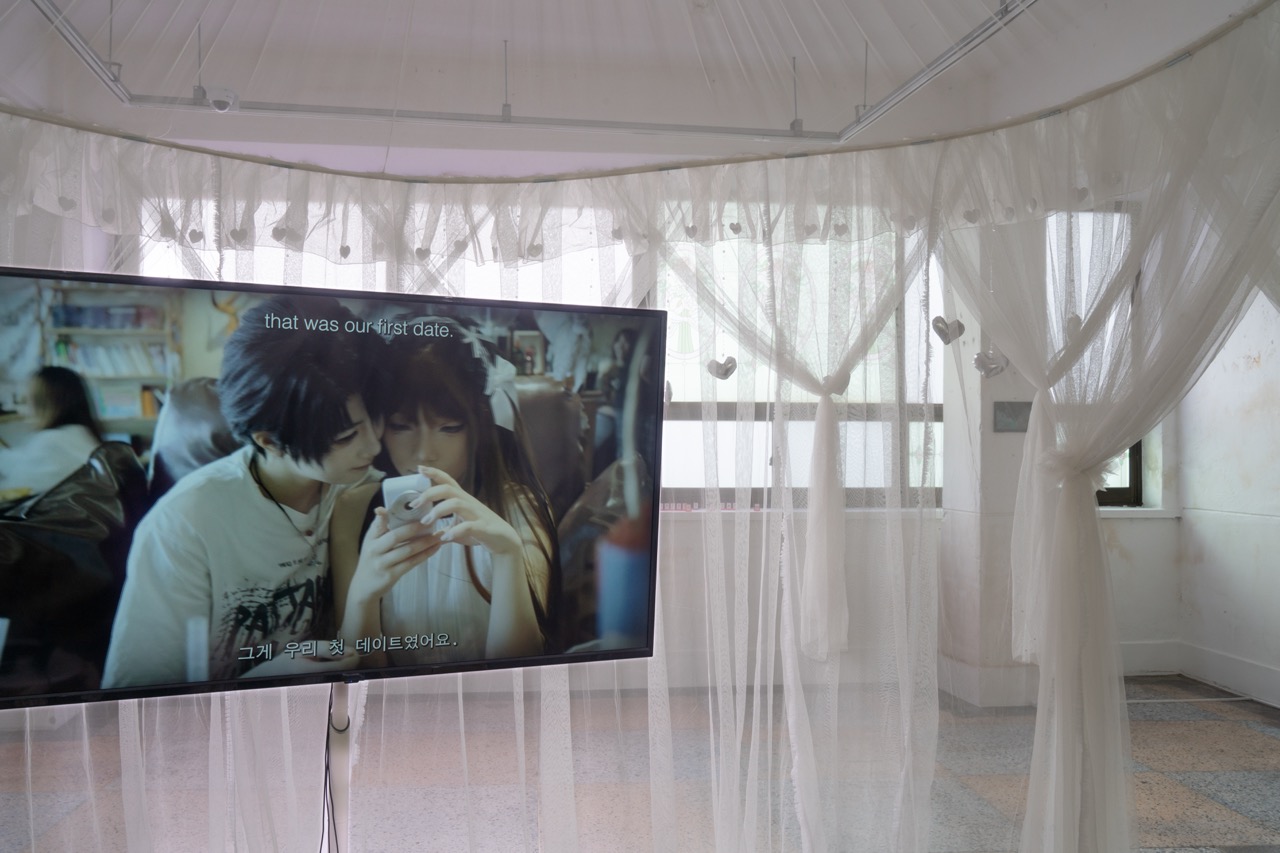
The second half, My Heart (On) Unlock (2025), derives inspiration from otome games (乙女ゲーム), romance simulation games primarily aimed at women. In Chinese fan communities, otome games have extended into three-dimensional reality. Within the culture of “one-day boyfriend” rentals, one woman performs the role of the male character, while another woman experiences the kind of love she had imagined with that character. While the previous case of Still Life (Nothing Here to See) subverts the relationships and roles expected of love, My Heart (On) Unlock explores how new dynamics of intimacy can emerge through reciprocal performance. For these women, the performed love is not simply a fantasy that replaces reality, but a lived experience through which they can learn and enjoy forms of intimacy and desire that are rarely given space in everyday life.
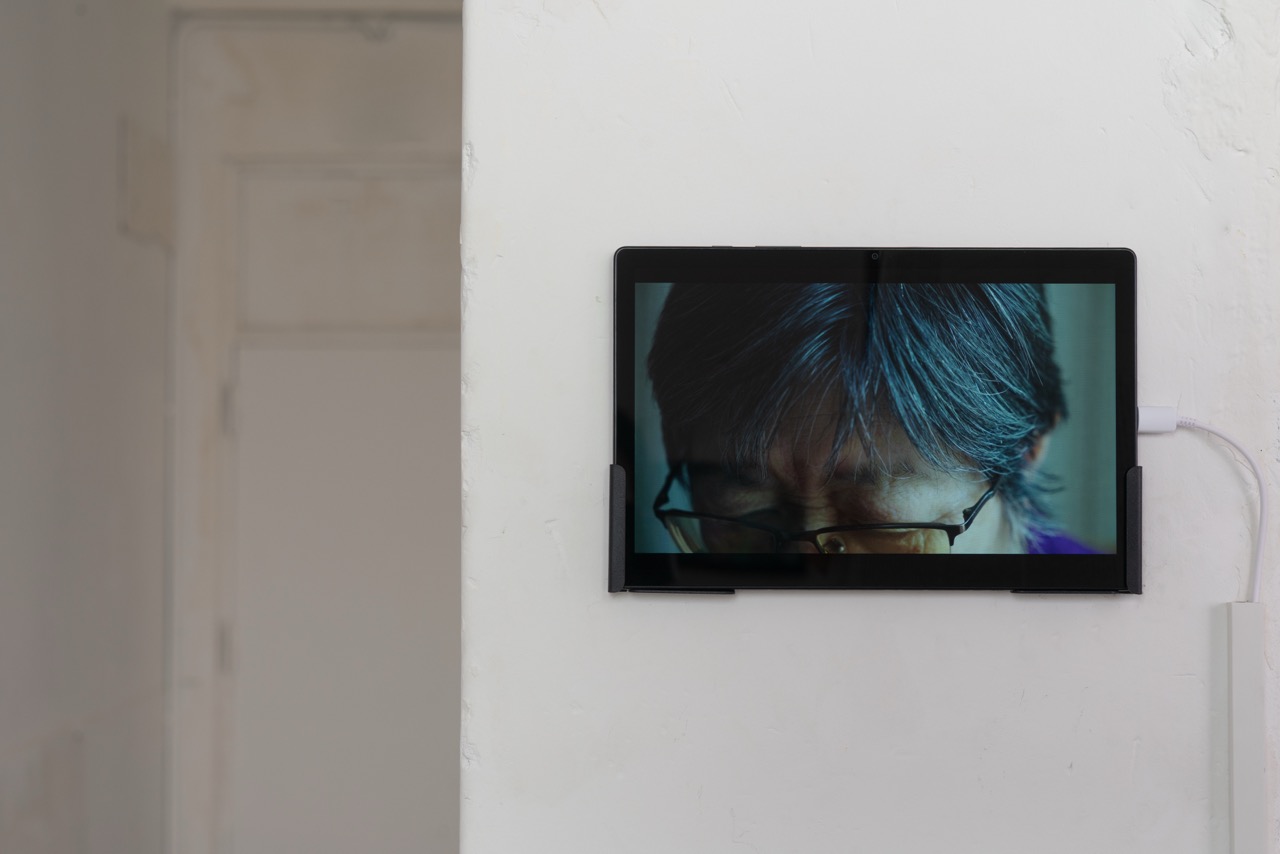
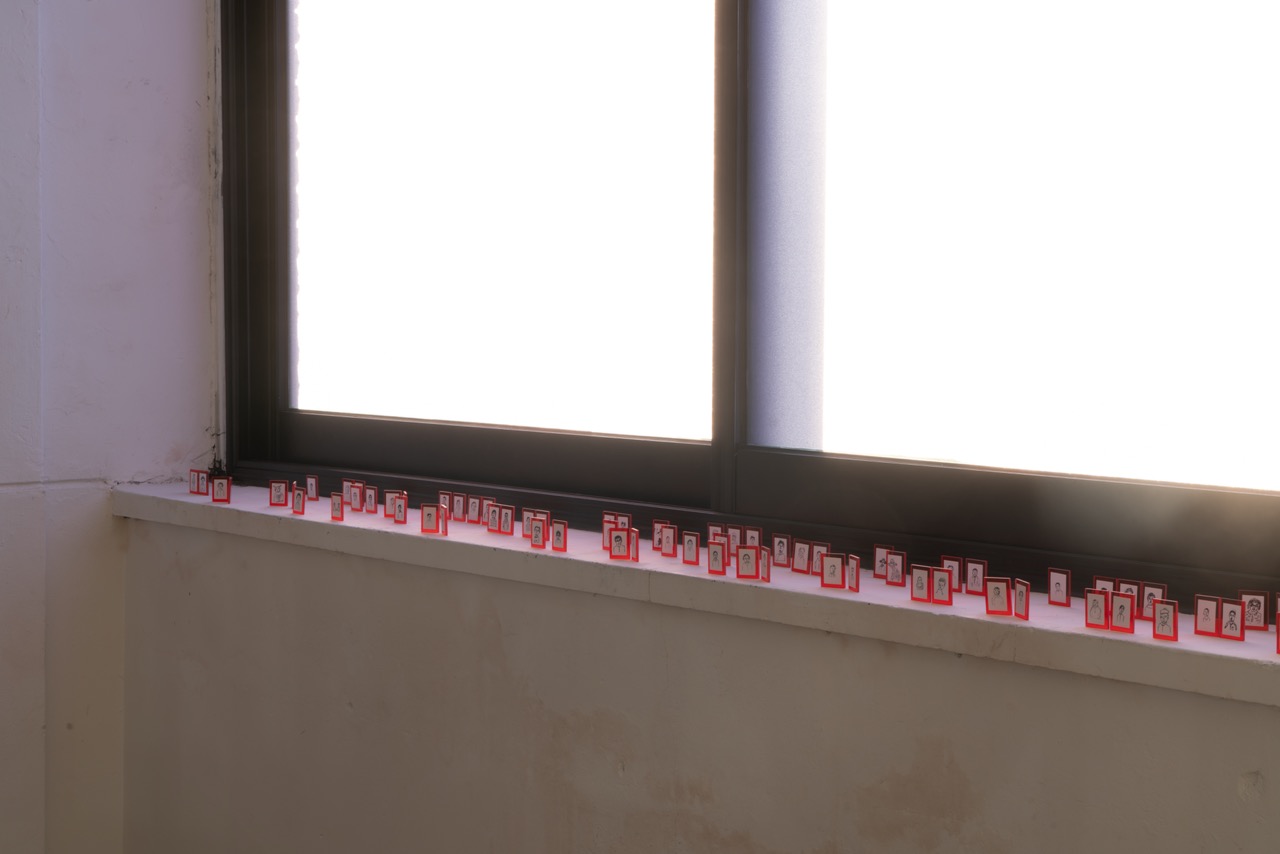
The third case, Portraits (2026), approaches love as a shared history of intimacy and care that is accumulated over time. Here we see portraits drawn over the course of one year by the artists’ grandparents, whose marriage began without love during the Cultural Revolution. While Pure Love Hospital attempts to diagnose and classify love, this ritual of two people quietly gazing at one another reminds us that love has no fixed shape, but takes on different forms over the course of a shared life according to the social conditions of each historical moment. The two figures quietly gazing at one another reveal a duration of relationship the diagnostic system can never fully grasp.
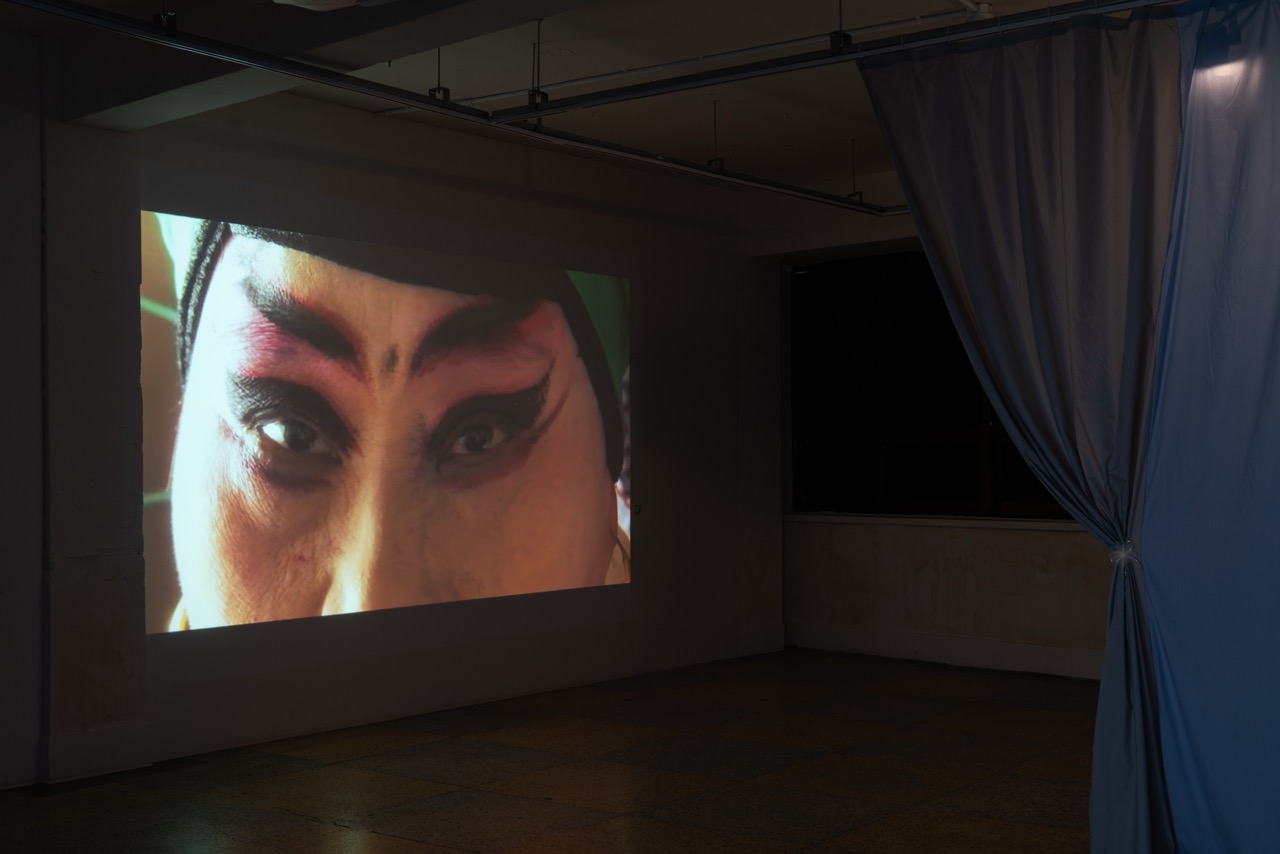
The final case, A knot can be untied if the loop is broken (2024), extends these questions to the level of community. The work follows the members of a Huai opera (淮劇)¹ troupe who refuse to leave an old theatre in Shanghai despite redevelopment. Although they have settled in Shanghai, the troupe remains systematically and culturally excluded from the rest of the city. Centering their lives around the theatre, they continue performing not only to preserve the heritage but also to sustain the community itself. The work suggests that care can exist beyond the state-recognized nuclear family, and that the slow and sustained practice of caring for one another and living together can become an enduring form of resistance.
As the exhibition unfolds, the cases gradually exceed the scope of the diagnoses assigned by Pure Love Hospital. Relationships cannot be explained by a single narrative, nor can performed love simply be dismissed as false. Ultimately, it is not the cases that produce errors but the diagnostic system itself, which seeks to explain different lives within one framework. (Un)trustworthy Hearts examines the normative language through which we are defined and judged in the name of love, revealing relationships, communities, and ways of living that have long existed yet have remained difficult to name.
Text by Sun Kim, Independent Curator
¹ Huai opera is a traditional regional form of Chinese opera originating in Jiangsu Province, combining singing, acting, and music.