leesima: on documenting bodies that incite deviation
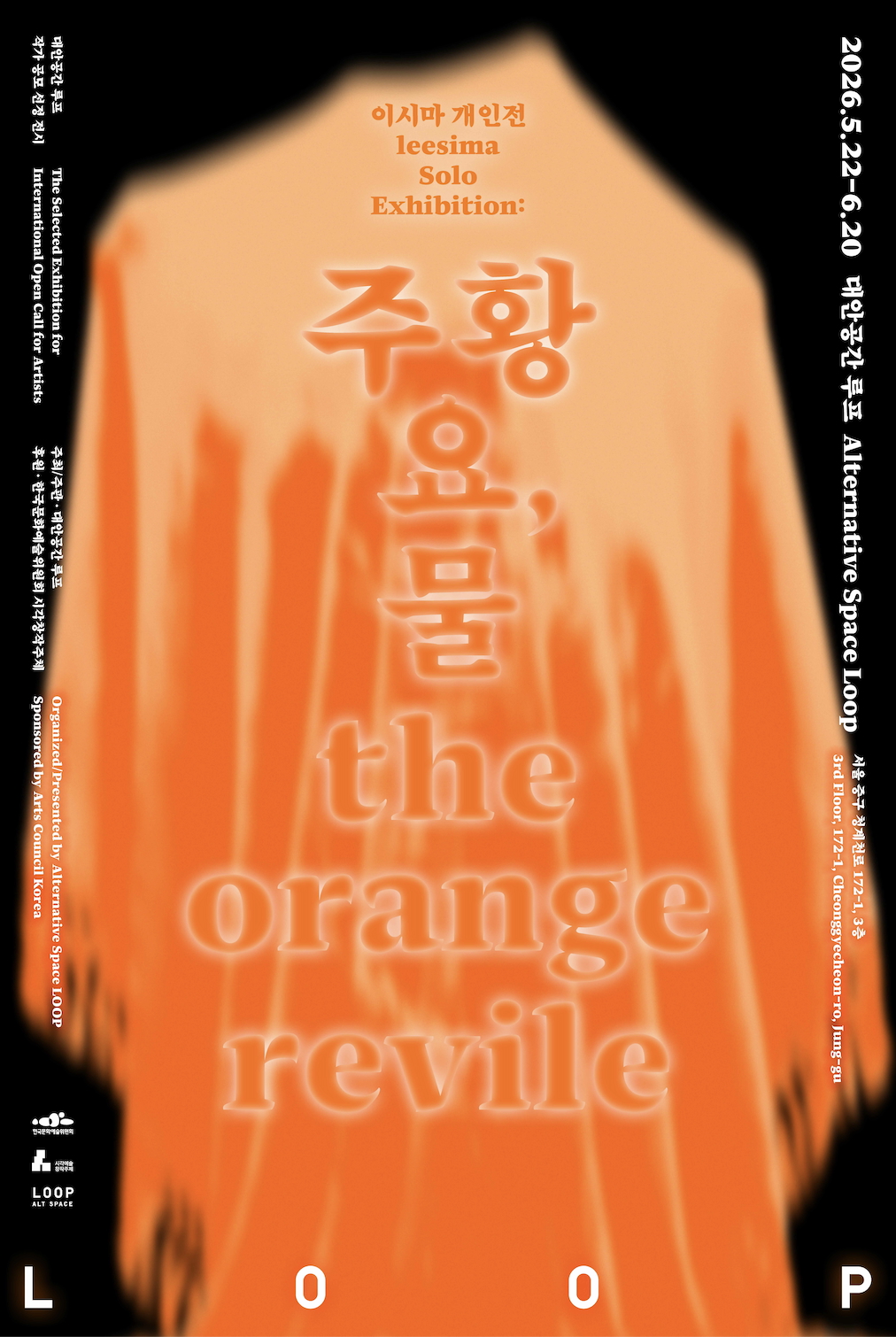
leesima Solo Exhibition: the orange revile presents three distinct approaches to performance that work through how norms perceive and organize the body, and how certain identities are constructed and sustained. Moving across seemingly disparate systems from shamanism to artificial intelligence, leesima summons the uncanny, where fear and humor, disgust and fascination are intertwined. In the exhibition, they document and share a lived condition: being bisexual and living with an eating disorder in a world that defines certain bodies and heterosexuality as the norm. Queer and feminized bodies are caught in a double bind. Once named, the subject is required to prove itself, as definition and proof reinforce one another. leesima brings this condition into a personal narrative, tracing how the individual is named, defined, and still continues to slip away.
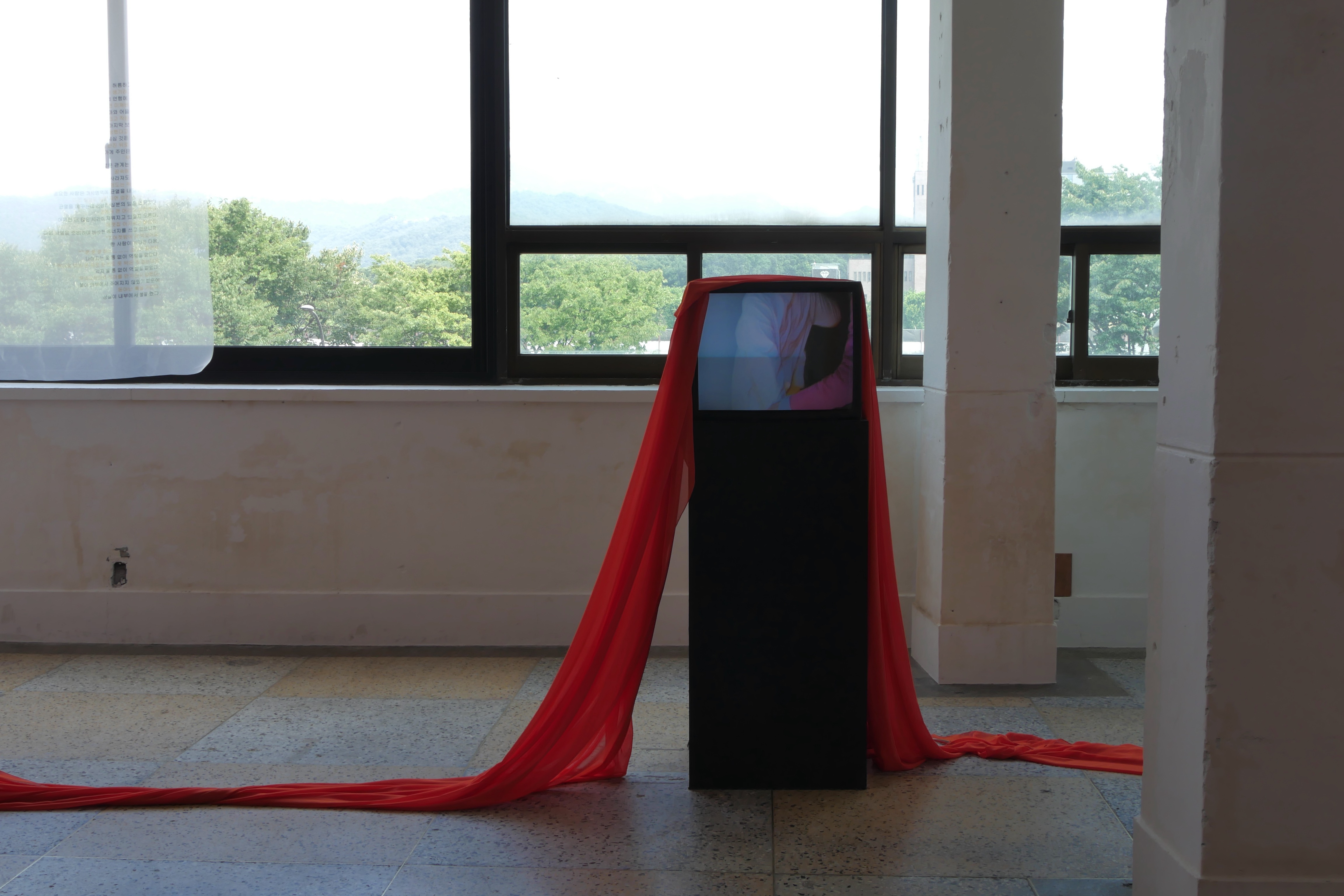
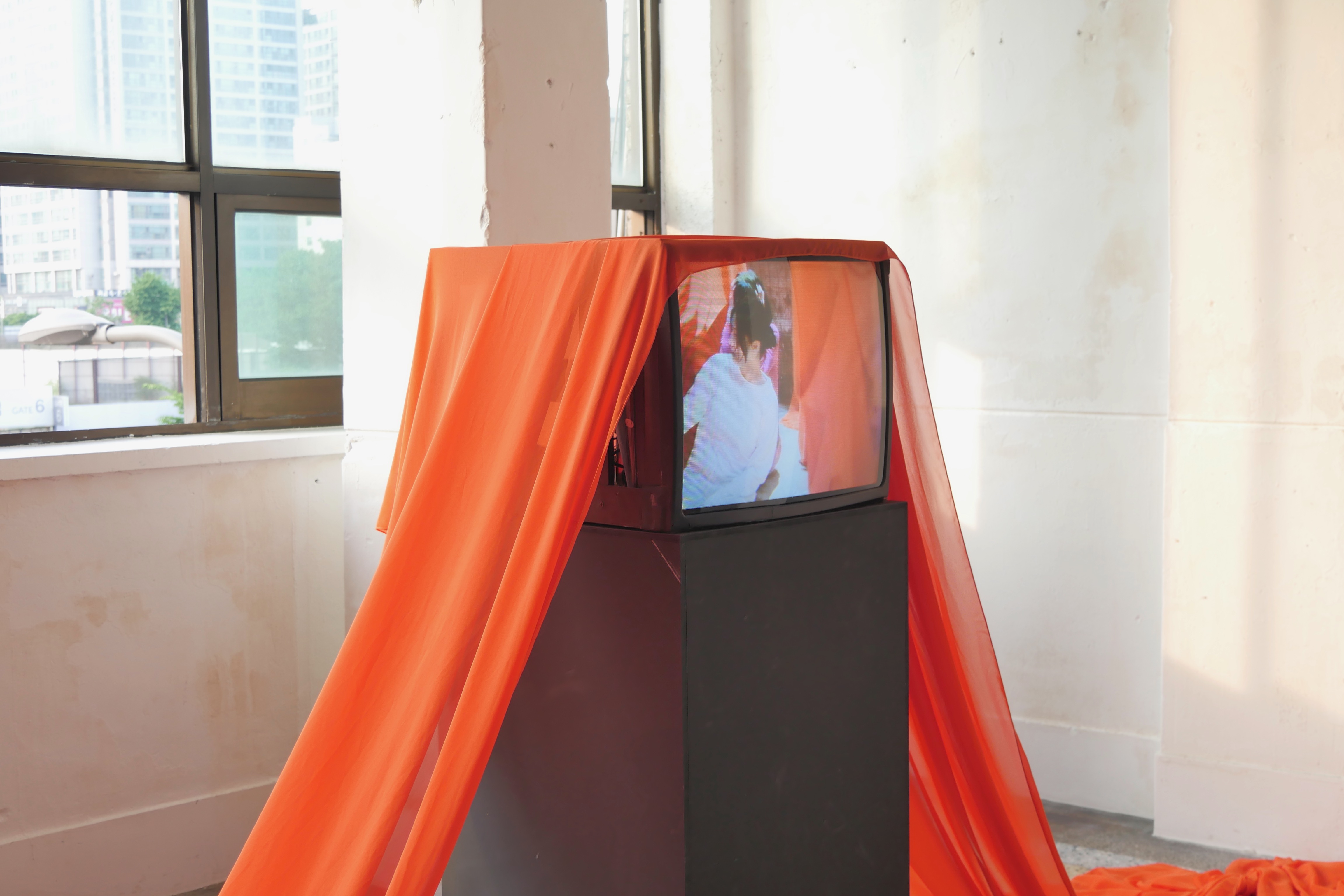
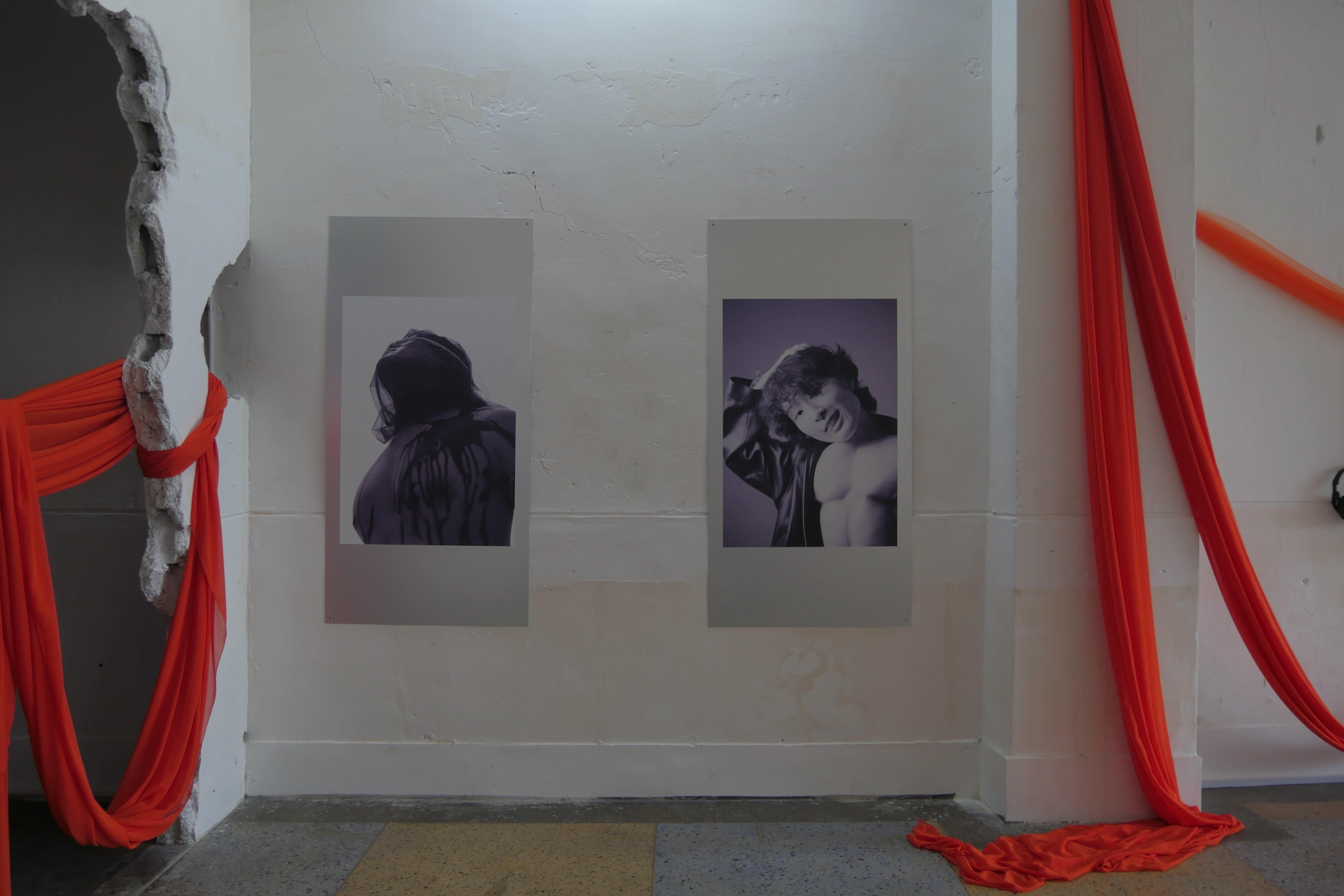
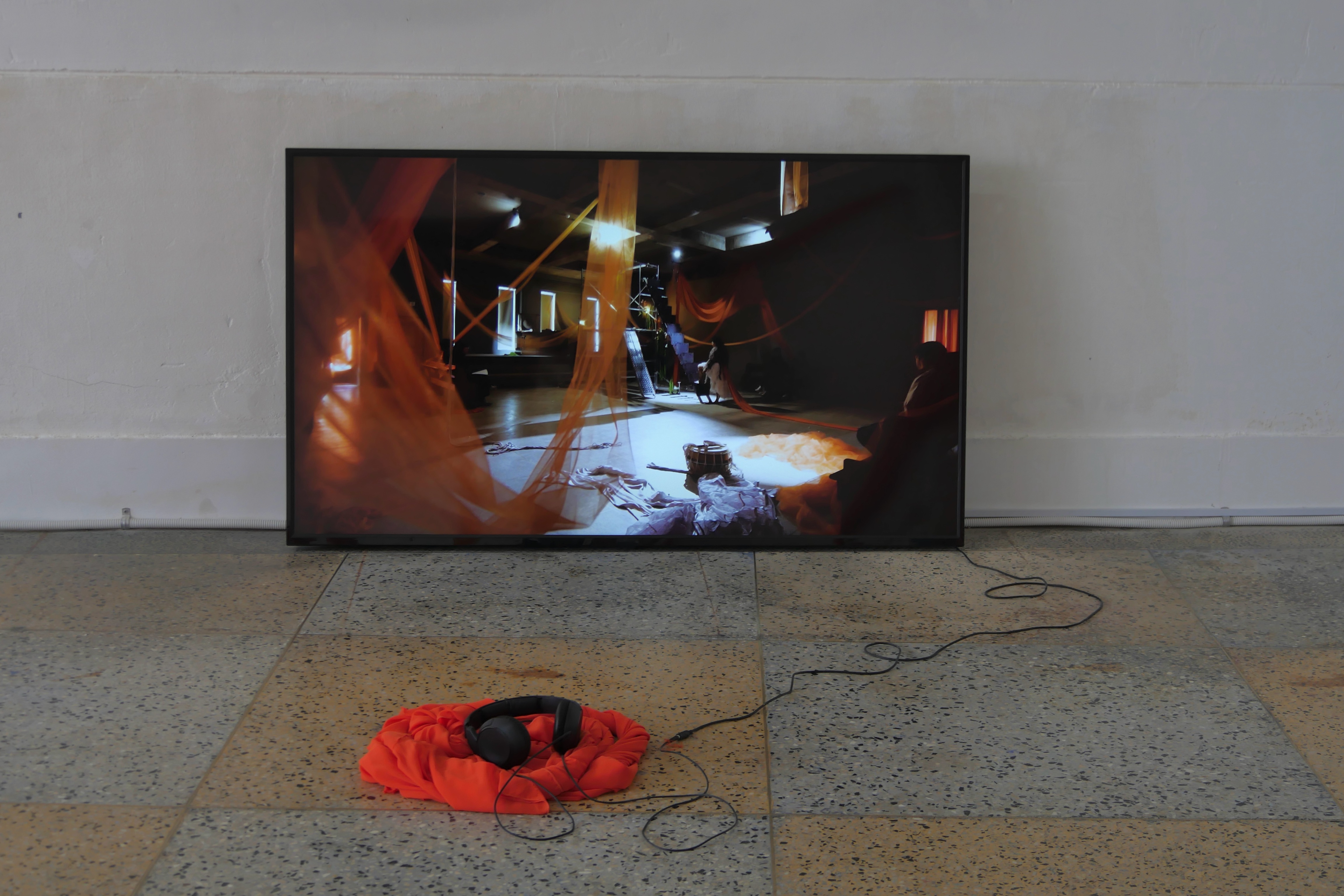
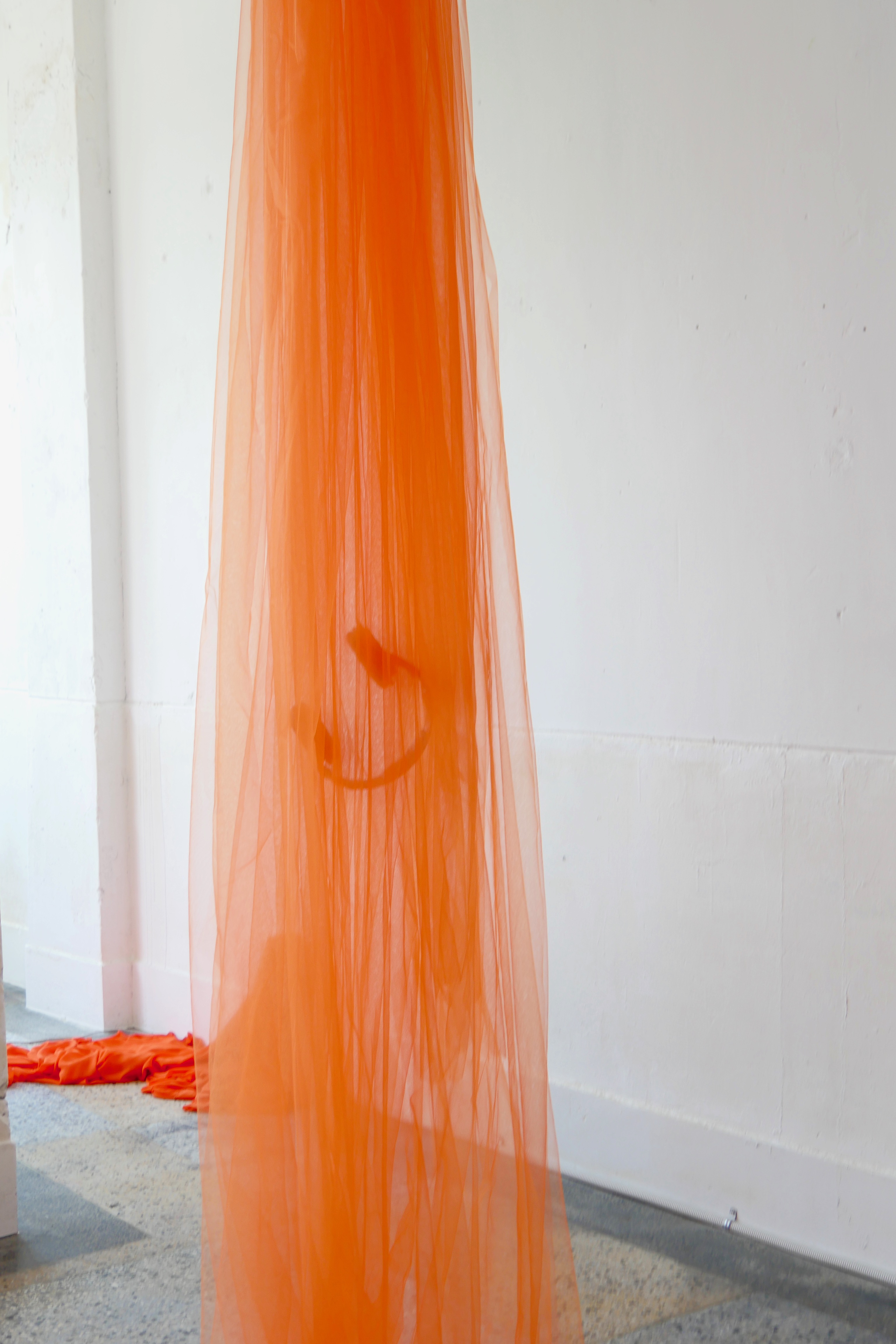
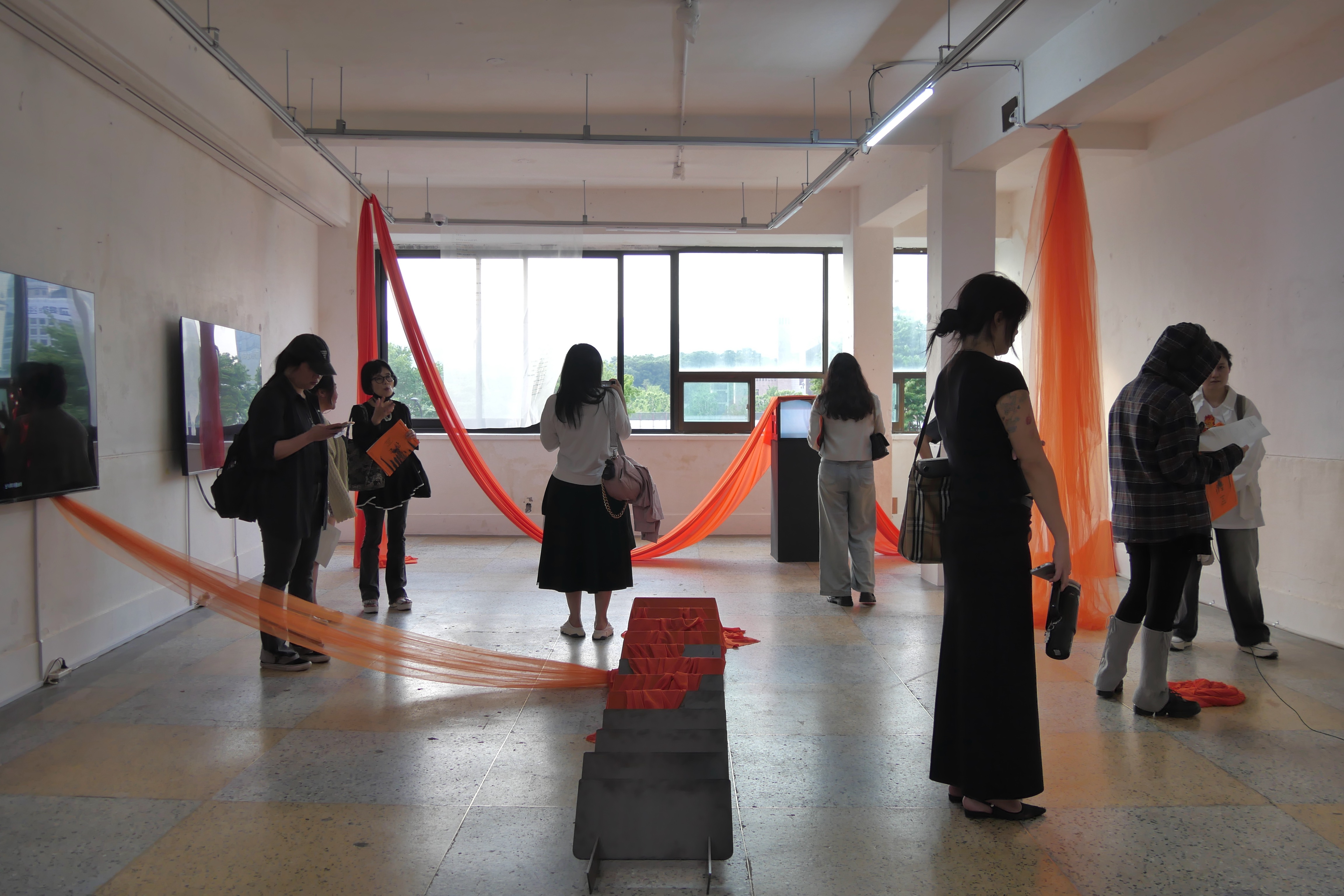
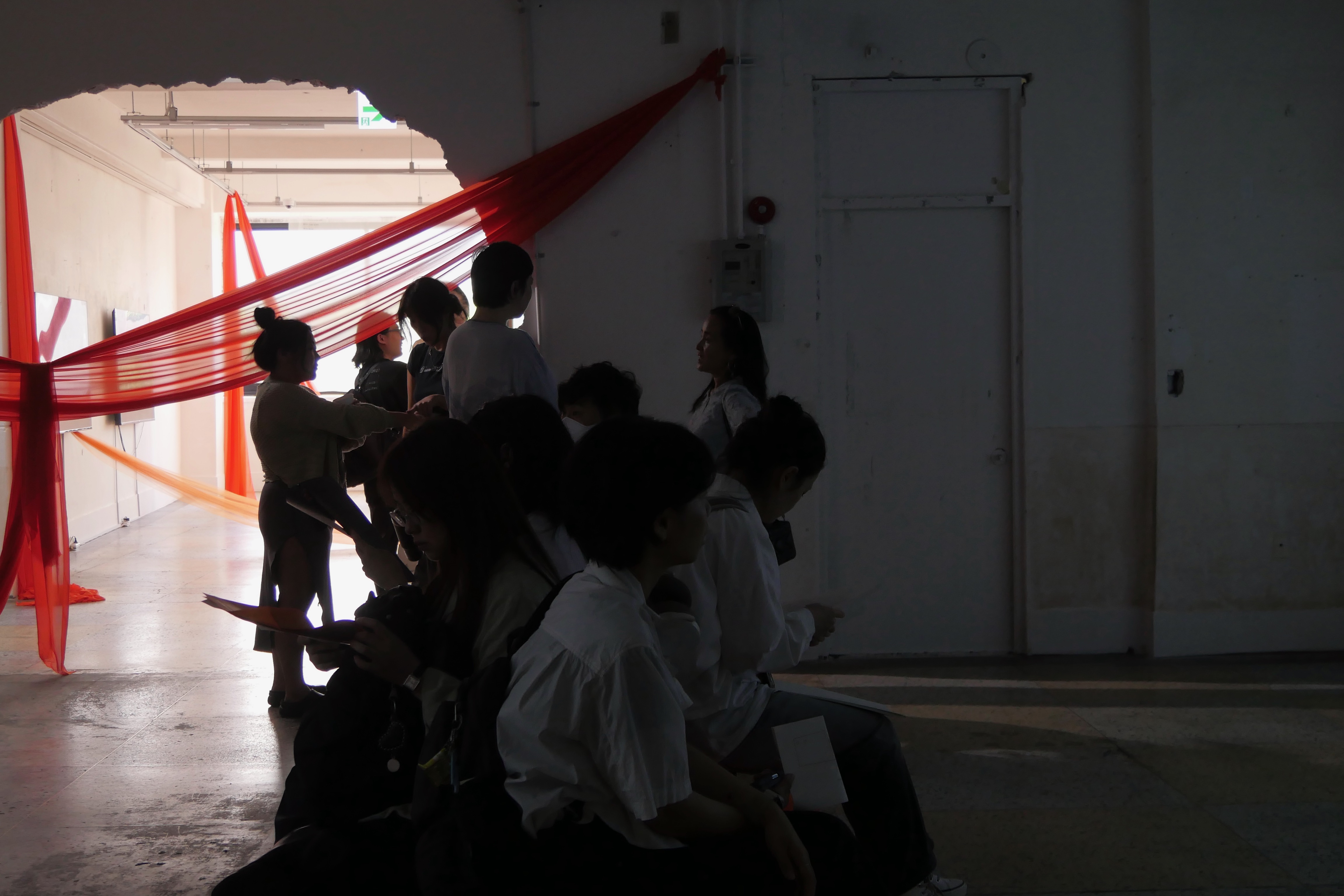
The orange yo functions as the exhibition’s central apparatus, giving sensory form to this structure. In Korean, yo refers to a thin bedding mat laid beneath the body. In the exhibition, yo is reworked as veil: not a surface of rest, but a structure that covers, conceals, and presses down. Beneath this orange veil lies mul(物): a thing, a body, or matter without fixed form. As mul is covered and transformed through the yo, it becomes yo-mul(妖物), or revile. From veil to revile, the body is named, read, and made illegible within the norm. The queer body is not deviant by nature. It is rendered so through the ways it is veiled, arranged, and perceived.
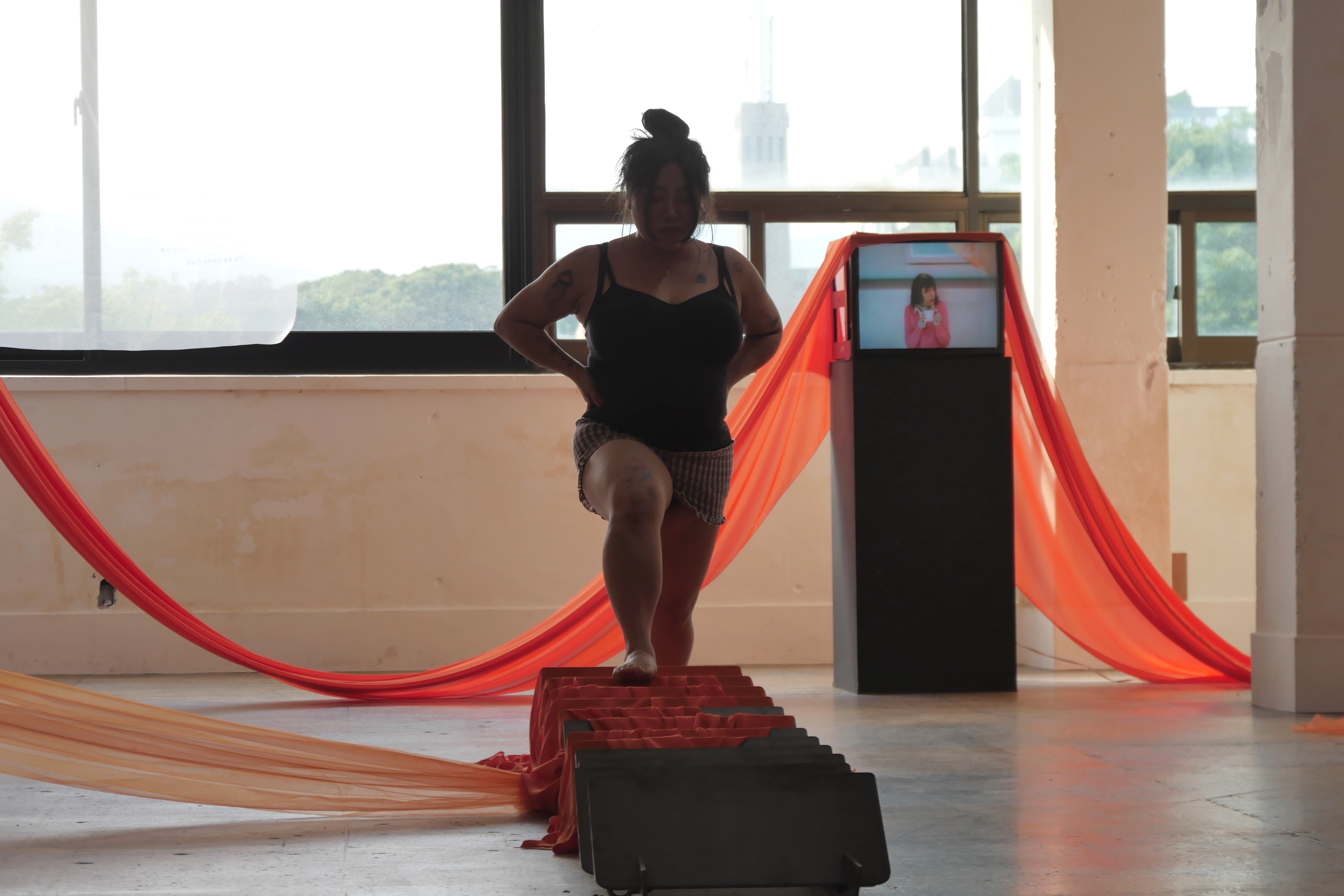
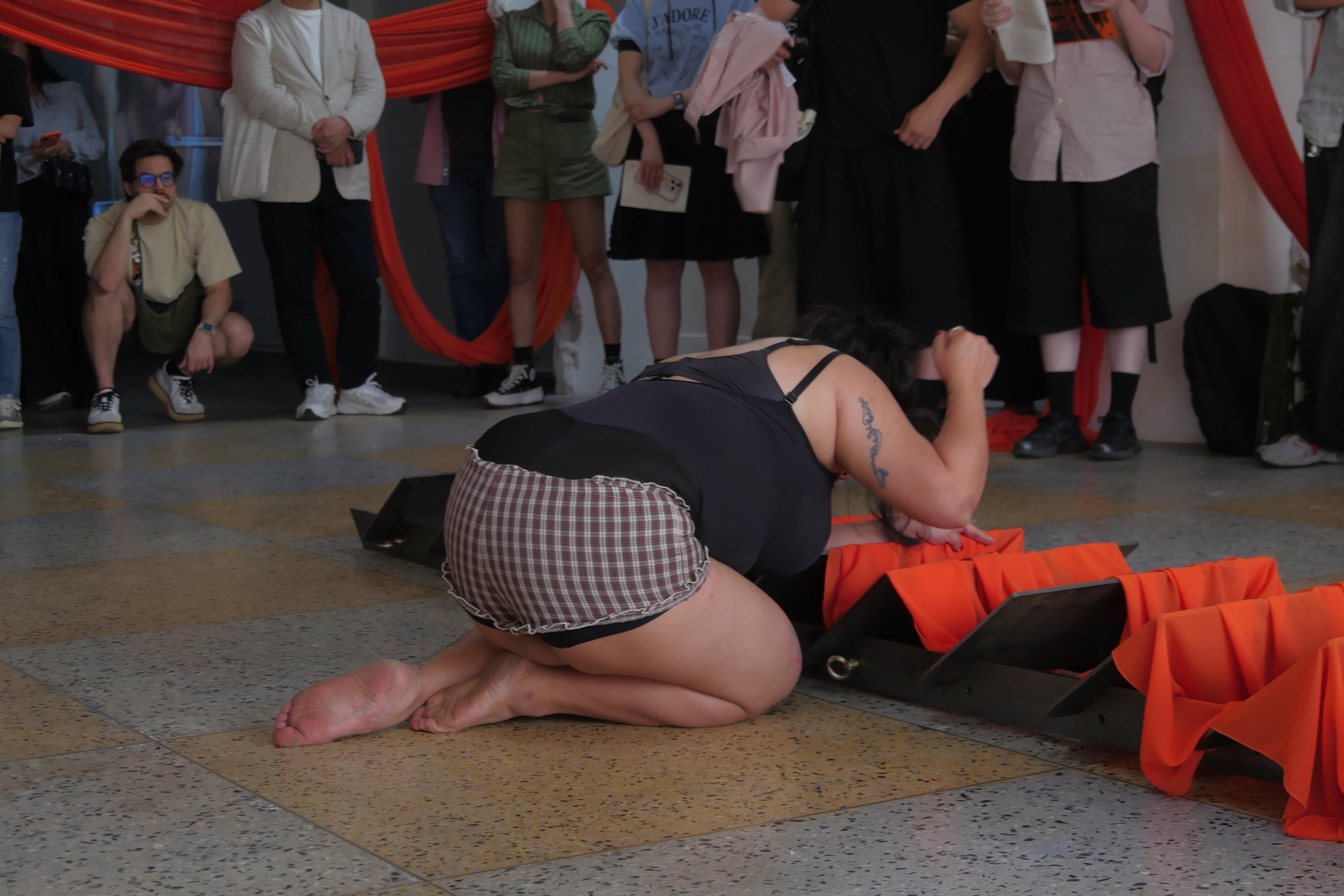
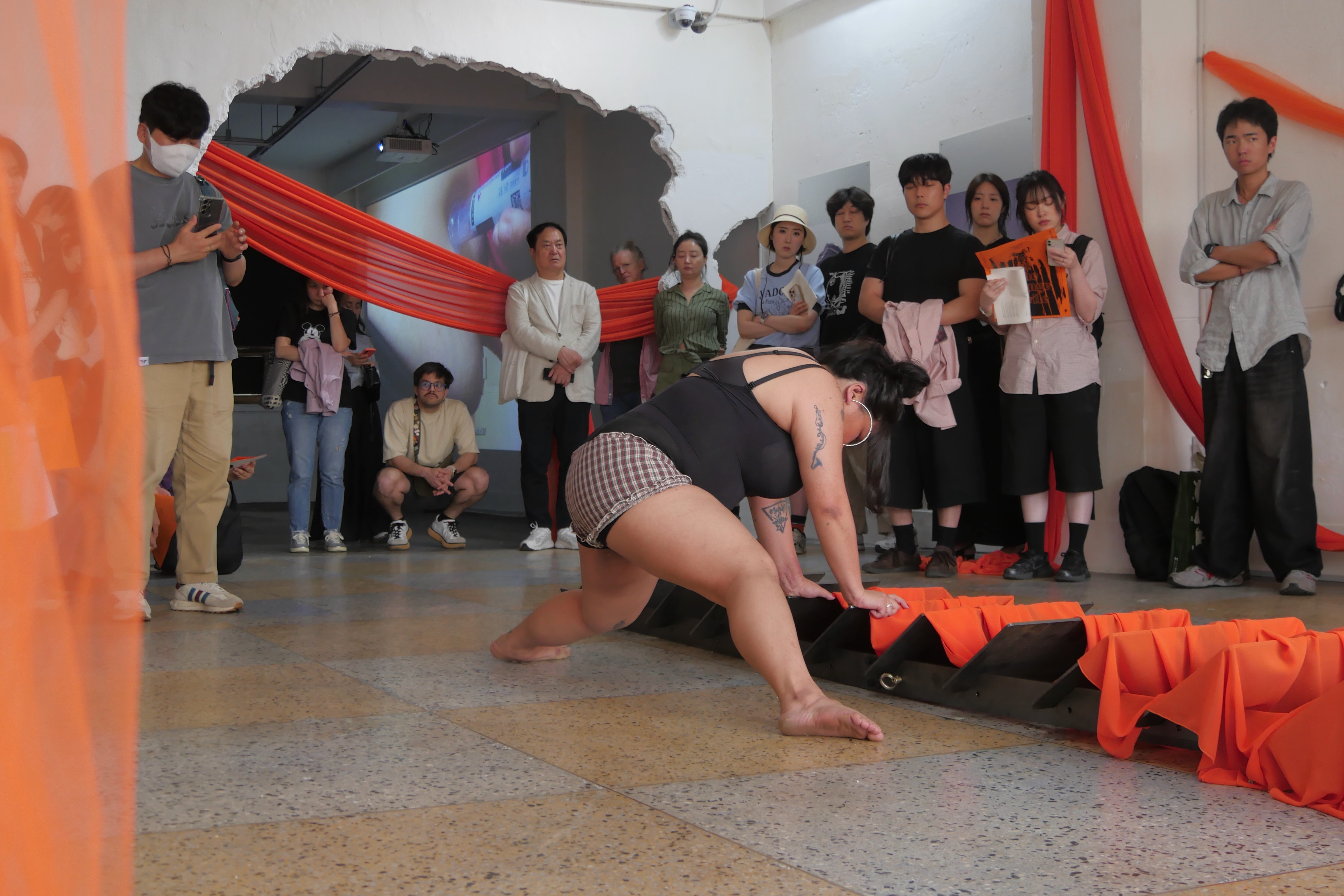
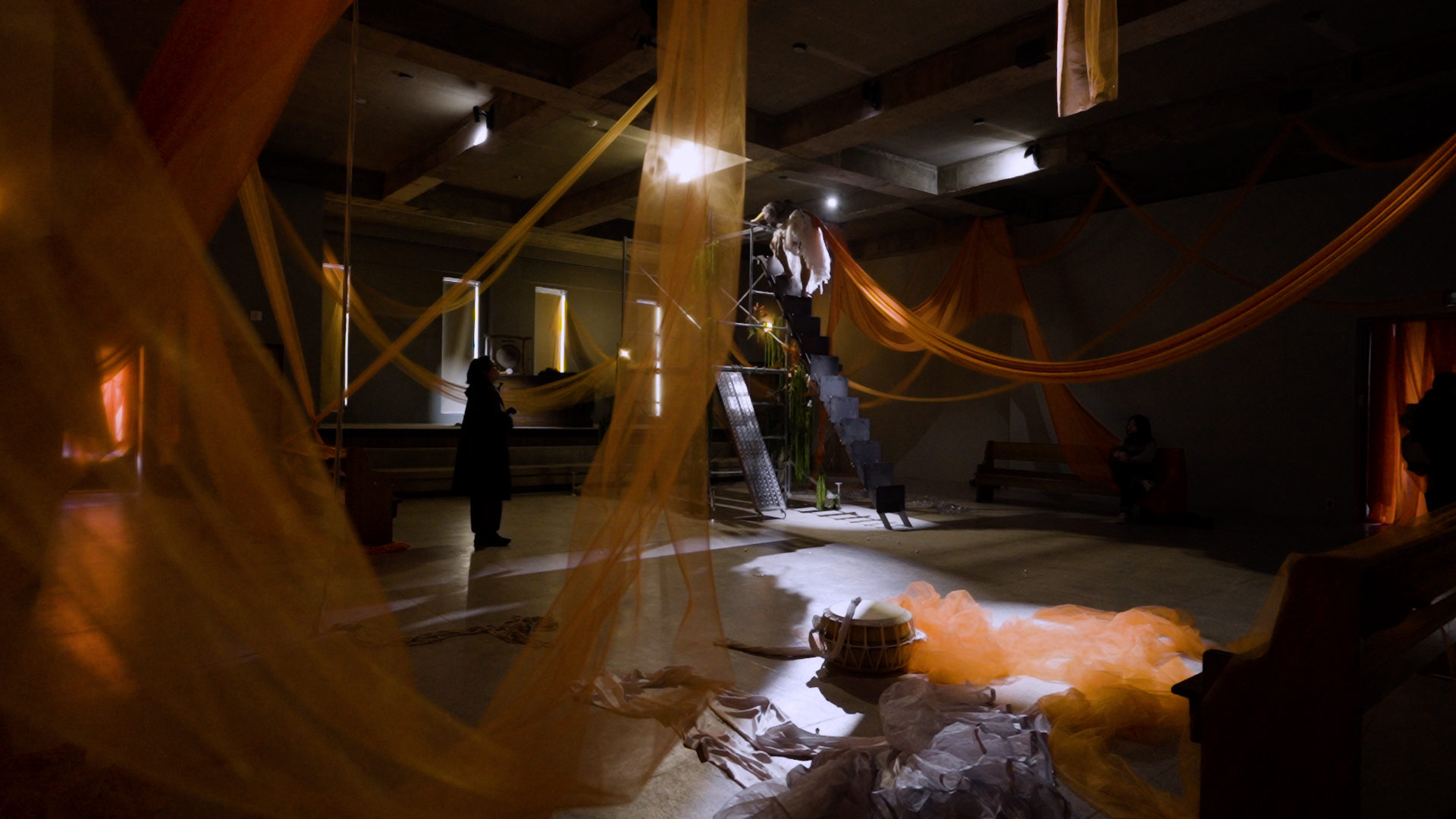
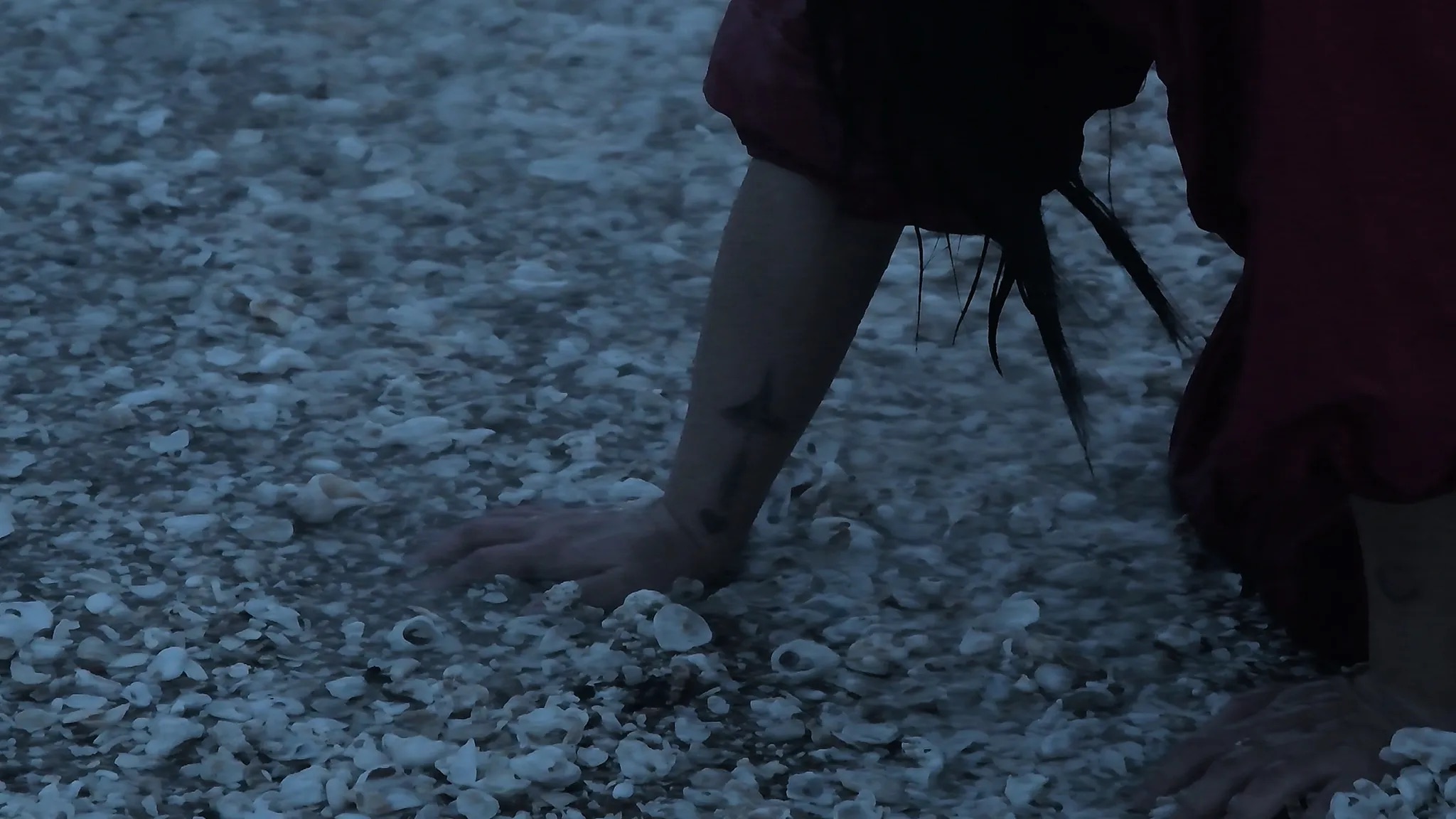
The exhibition unfolds through three performance series, attending to the pressure placed on queer bodies, the pull toward normalcy, and the desire to remain outside it. purified water, egg solution, milk cream begins with contact with others, where immediate reactions, improvised gestures, and social stigmas surface through the body. The hidden norms and latent forms of queerness are spoken, acted out, and exposed. In the orange veil, leesima repeatedly performs an adapted form of jakdu gut — a Korean shamanic ritual in which a shaman treads on the sharpened blades of a straw cutter. For six hours, they stand on the blade, climbing and falling through the veil. Transcendence and exhaustion appear through the body. The audience is drawn into the fatigue of proving oneself again and again. The exhibition’s title work, the orange revile, consists of the documentary film vomit and the performance splitting legs. Together, they trace leesima’s year-long confrontation with their body, eating disorder, and self-hatred. Through these works, the artist moves away from relations with others and turns toward the self. The layers of sensation inscribed in their body reveal that the body is not only disciplined by the gaze of others, but also learns to demand norms from itself.
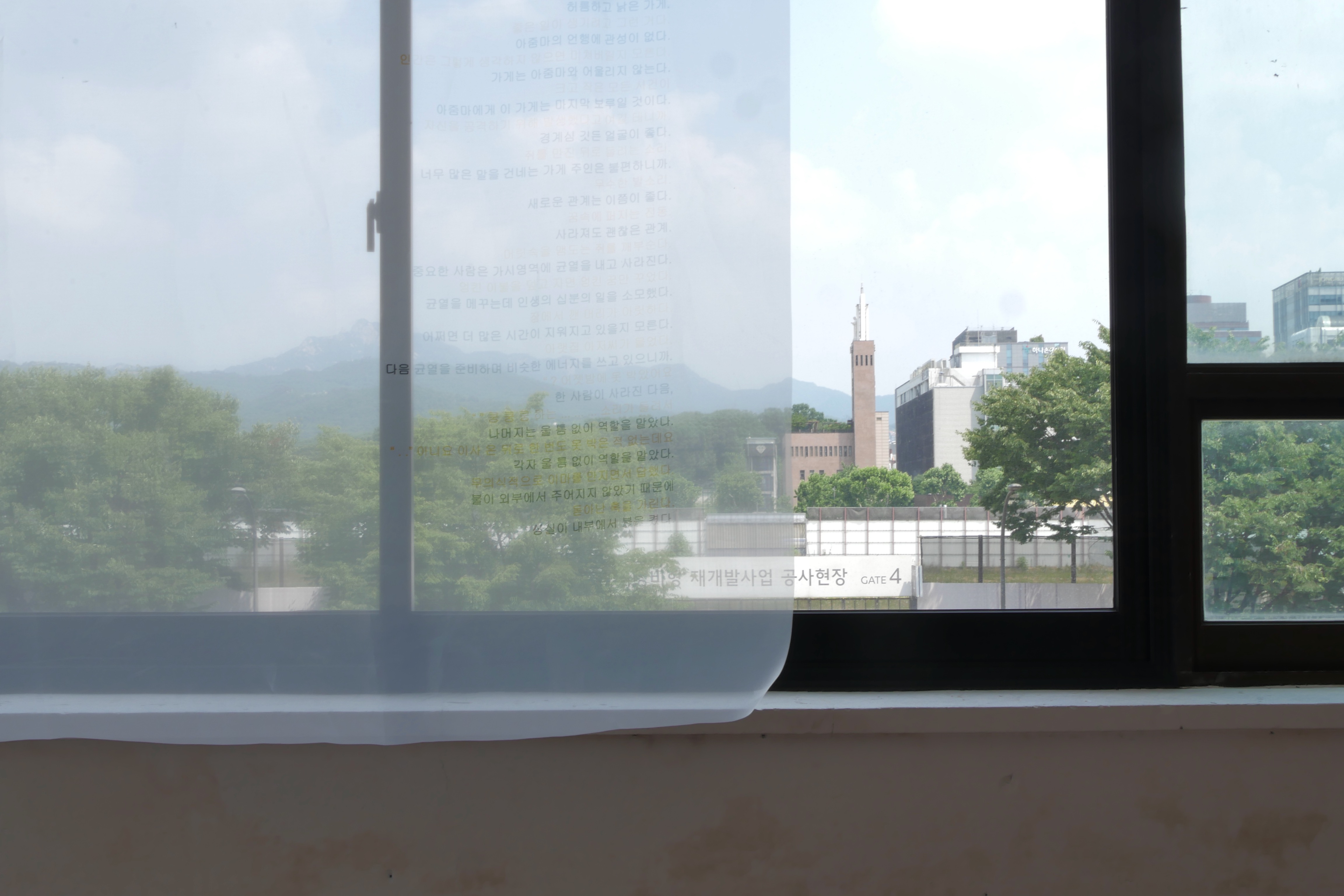
leesima also attends to what remains after performance. Through sound, text, and secondary forms of representation, they reconstruct performance and ask what remains, and what disappears. This reveals the gap between normative languages — the average, the ordinary, and the universally accepted — and the sensations of an individual who slips beyond them. The exhibition arrives at a question: How can a body that exceeds the language and forms of normativity exist, remain, and be documented?
Written by Sun Mi Lee, Translated by eunseo kim